Einkorn
gluten-safe - primordial grain from the dawn of agriculture
Einkorn's natural gluten is easier to digest, especially when fermented. Each order is stone-milled fresh the day that it is shipped.

Contact Eli for orders: growseed@yahoo.com
Organic Einkorn Grain
|
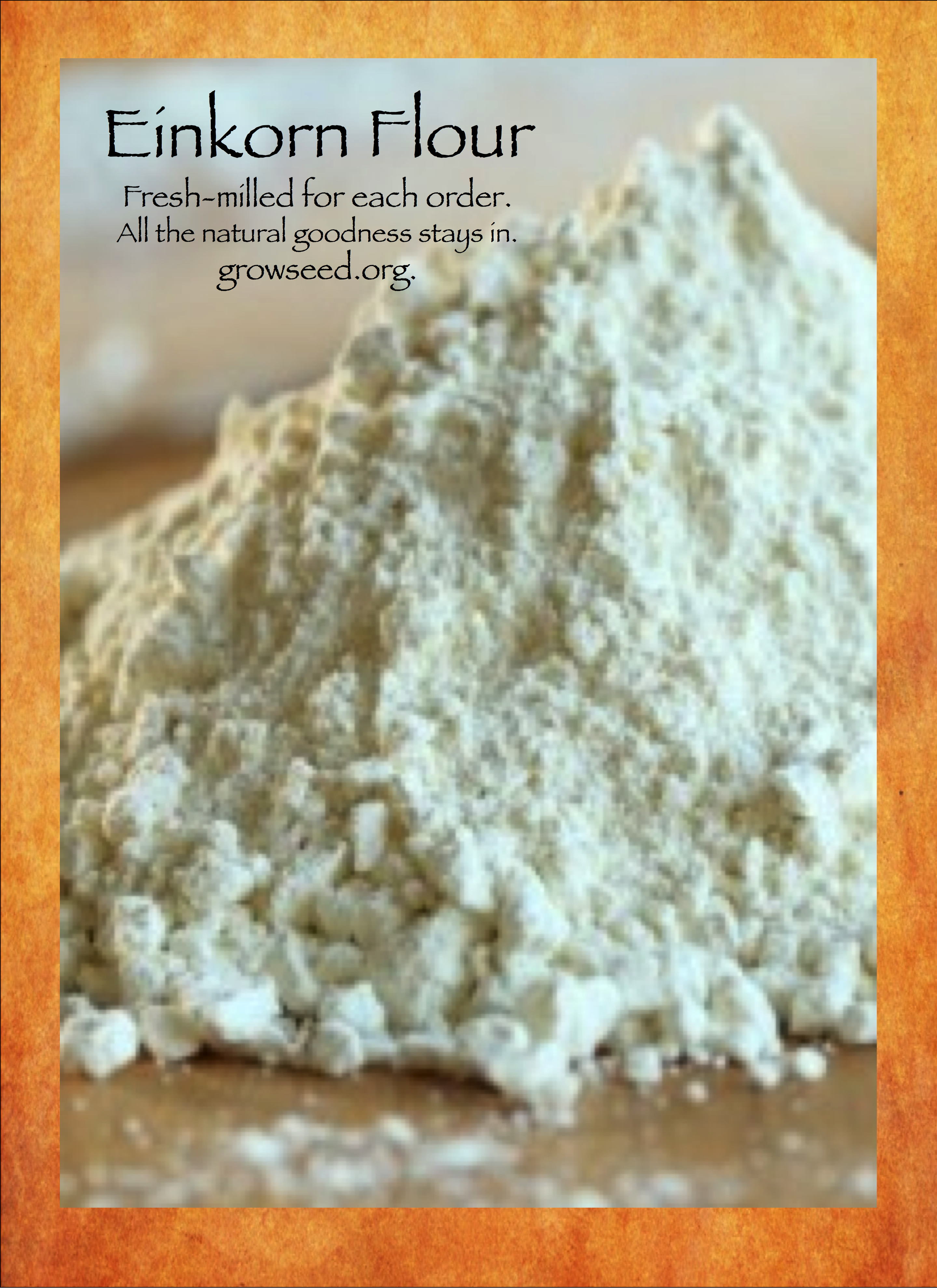
Organic Einkorn Flour |
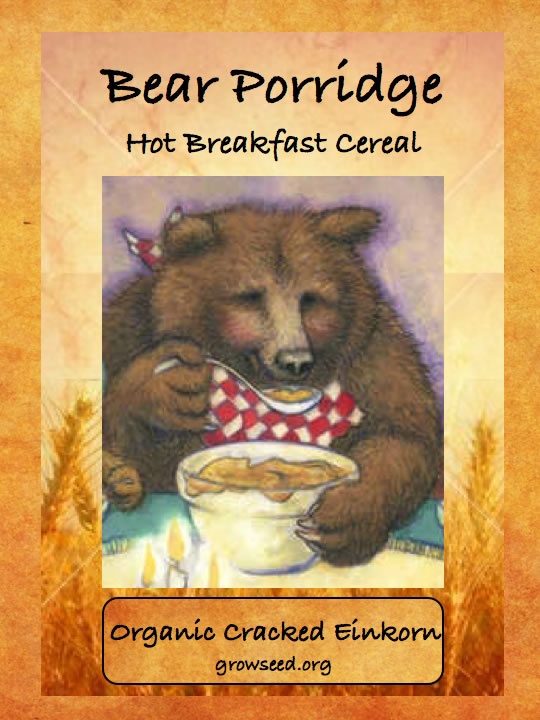
Einkorn Breakfast Cereal
Coming Soon Enjoy as a sweet hot cereal or savory polenta packed with nutrition to sustain you through the day. Stir 1 unit of porridge into 2.5 units boiling salted water, cover, simmer ~ 15 minutes till soft and tender. For quick prep, soak in cold water overnight then simmer in morning. Children love it!Cracked wheat was a staple dish in ancient and medieval cuisine. Traditional recipes add milk, eggs, almonds, currants, honey, saffron and rose flower water, served with meat as pottage with venison, fish or in risottos. Boiled cracked wheat topped with yogurt in ancient Persia to Turkey.
|
Einkorn Bread Mix with Chia Seeds
Coming Soon Ingredients: fresh-milled einkorn flour, einkorn grain for sprouting, chia & flax seed, seasalt, dry sourdough starter, Optional to add: maple syrup or honey, oil, kefir, egg or spring water Einkorn 'Skinny Bread' helps you lose weight!!
Einkorn sourdough bread satisfies longer because it does not raise blood sugar like modern wheat bread.
Lower glycemic index of einkorn compared to modern bread. Starter Instructions. Why Sourdough is healthier.
|
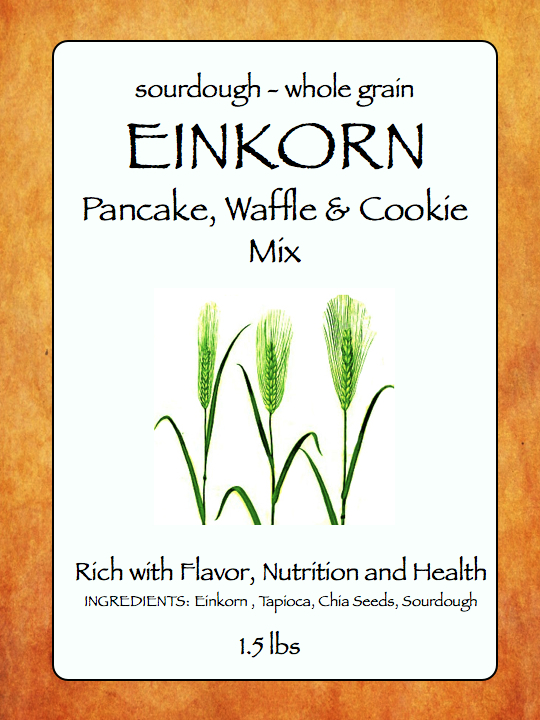
Einkorn Pastry Flour
Make fluffy, rich-flavored pancakes, crepes, waffles, pastries or cookies with our versatile multi-purpose einkorn pastry mix. Ingredients: einkorn flour, tapioca flour, dry sourdough starter and chia seeds Coming Soon
Sourdough Pancake Recipe Night before, mix four heaping tablespoons flour and starter with pure water for a thick batter. Do not refridgerate. Next morning beat in one egg. Slowly beat in tablespoon or two of milk to a thin batter consistency. Optional: Grate in cheddar cheese. For crepes, top with riccotta-sweetened-with-maple syrup and lemon, then roll.
|
Einkorn Pasta Made from organic einkorn flour and seasalt; a high-nutrition delight with any meal. Coming Soon Special Order to growseed@yahoo.com
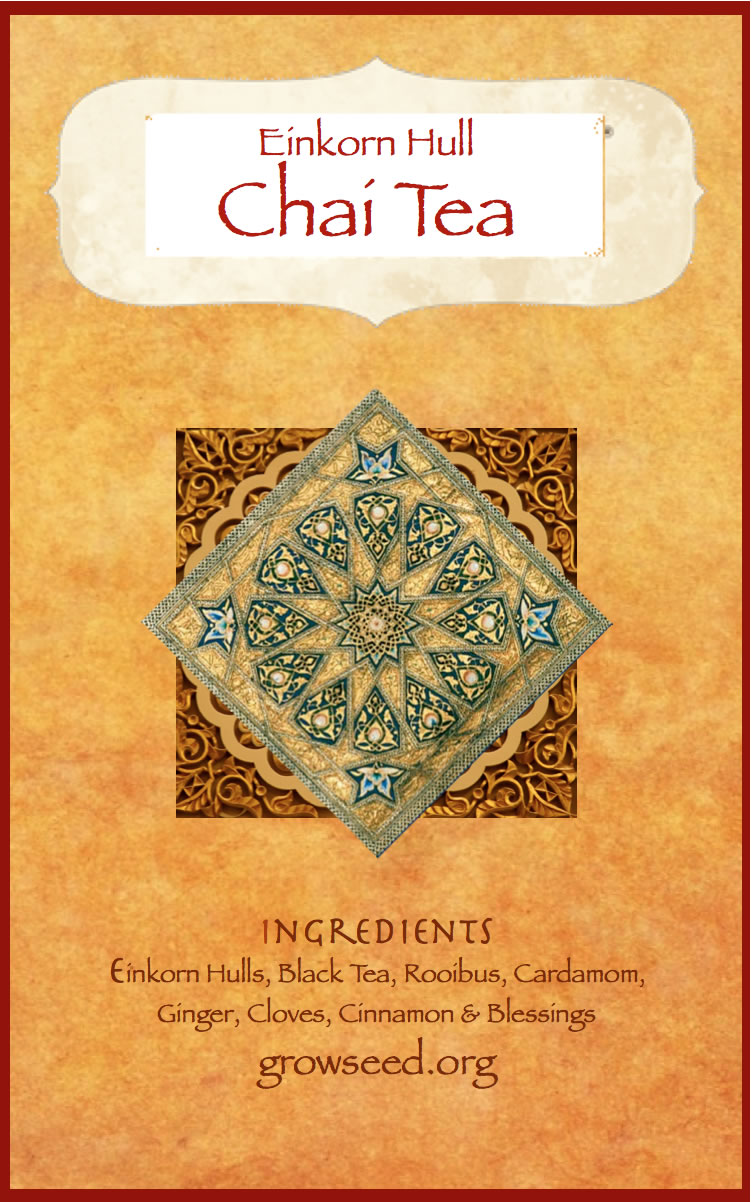
Chai Tea
Drink to your health with Rooibus, Cardamom, Ginger, Nutmeg, Vanilla, Cinnamon, Einkorn Hulls & Blessings. Ingredients: CARDAMON - Antispasmodic, digestive stimulant, eases flatulence, relieves headaches. CINNAMON - Relieves nausea, flatulence or diarrhea. CLOVES - Antiseptic, antispasmodic, prevents nausea, breath freshener. GINGER - Sharp taste. Eases a cold, brings warmth and settles stomach, cleansing effect on body, prevents nausea, improves digestion. VANILLA - Calming and tasty * HOW TO MAKE CHAI TEA * These statements not evaluated by the FDA.
|
Baking Tips and Recipes Einkorn is more flavorful and easier to digest than wheat but has a different gluten quality. To optimize your baking experience, we suggest:Use fermented sourdough starter to enliven with vitaity. Wild yeasts are the same microorganisms teeming in a healthy human digestive system. Use living spring water, not chlorinated tap water. No-Knead Bread - Einkorn dough may be sticky at first because einkorn absorbs liquids slower than wheat. Oil your hands for easy kneading. Excessive kneading does not develop greater gluten. Time does. Knead until the dough is hydrated and responsive with spring back. Do not “let the dough rise until it has doubled in size then punch down”. If dough rises too much, it will deflate in the oven. Under-proof rather than over-proof. After kneading and shaping, place overnight in the fridge in a bread pan covered in a plastic bag then bake the next day. Place a pan of water in bottom of oven to enhance a crisp, golden, caramelized crust with the irresistible aroma of freshly baked bread. Pastries and Cakes - Substitute 1/4 of the einkorn flour for tapioca flour for enhanced crispness. Einkorn has less starch than wheat so add an extra egg or egg white to batter for a lighter cake. Easy No-Knead Einkorn Sourdough Sprout Bread Recipe Einkorn Challah: 4 and 6 Braid Instructions!
Olive Onion Cheese Einkorn Fougasse Bread
|
GLUTEN-FREE
QUINOA - TEFF - CHIA BREAD MIX
Bread with Quinoa Grain |
Finally! A gluten-free health bread! Ingredients: Quinoa flour, Teff, Chia Seeds, Seasalt,Yeast $15. - 1.5 lbs - makes two loaves Recipe: Add 2 eggs, 1 tps olive oil, ~1/2 cup of milk or spring water or sourdough starter, 2 tbs maple syrup or honey. Mix well. Knead gently. Dust with quinoa flour. Form loaves into small oiled, floured baking pans. Cover with pastic bag. Let ferment slowly overnight in the fridge. Bake next day at 330 till golden brown. Cool before slicing. |
Teff |
Bake Paleolithic bread with hulls-on einkorn as an eductional experience. Click for recipe.

Available after 2014 harvest
Einkorn Malt
grown by Eli Rogosa, malted by ValleyMalt.com for special order. Contact growseed@yahoo.com
"We know God loves us because He gave us beer." Ben Franklin
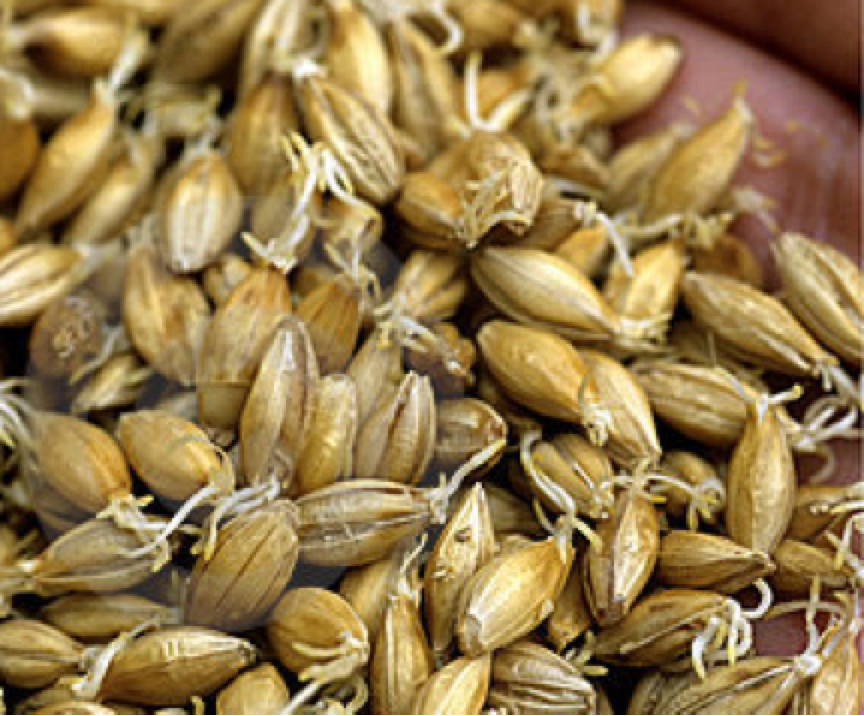
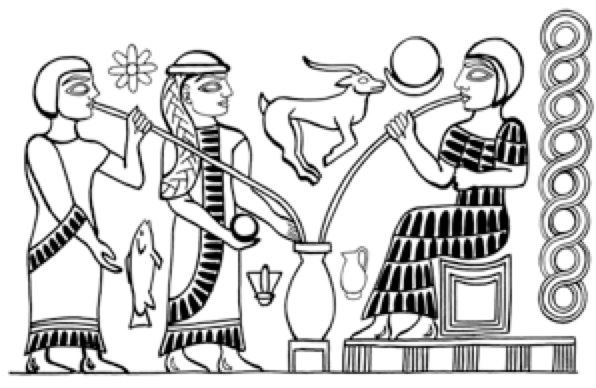
Which came first - bread or beer? In the ancient Mesopotamian Epic of Gilgamesh, when the wild man Enkidu drank einkorn beer, ‘his heart grew light, his face glowed and he sang out with joy’. Ancient naturally brewed beers not only lightened the heart, but were brewed with healing herbs and even contained antibiotics.
How was ancient beer made?
Ancient peoples discovered 'beer' by tasting sprouted grain bread that had been left in water to ferment naturally. Gradually the art of producing beer evolved using sprouted grain bread boiled with dates or honey and fermentation. Later the bread stage was skipped, and the grain was soaked in water, sprouted, dried (malted), mixed with water sweetened with dates or honey and left to ferment naturally. Ancient ‘beer’, more like an unhopped ale or gruit, was a thin oatmeal-like porridge-brew with about a 3% alcohol by volume. You can recreate this ancient brew using the recipe for Einkorn KVASS above.
Brewing Basics: Sterilize all pots and bottles thoroughly. Simmer malt (ground dried sprouted hulled grain) in water for about half an hour (mashing) The sweet liquid tea-like ‘wort’ is then boiled and filtered for up to an hour. Herbs, spices, sugar, honey or maple syrup can be added to taste. The wort is rapidly cooled, then yeast is added. As the wort slowly ferments at room temperature, the sugars are converted to alcohol.
The Talmud (Pesachim 107a) describes four different types of beer; Shechar (grain beer), Pirzuma (date beer), T ’ainy (fig beer), and Asni (berry beer). Date beer was especially enjoyed in Babylon (Baba Batra 96b). Beer was used as a medicinal tonic to preserve herbal extracts in alcohol. Hops were added to balance the sweet malt with bitter astringency and as a preservative. Fermented herb beers, known as ‘gruit’ in Europe, were common in Ancient Israel. Even fermented milk, common in nomadic societies, was enjoyed. Cohanim priests who drank too much fermented milk were prohibited from serving in the Temple if they were inebriated (Talmud, Krisus 13b).
Available after 2014 harvest

CANADIANS! Orders in medium flatrate boxed please add an additional $25. for shipping using the 'add to cart' button below:
International Shipping Costs - Please remit via 'send money' on paypal.com to: growseed@yahoo.com
Canada / Other Countries
Medium Flat Rate Boxe: 40.95 / 59.95
Large Flat Rate Boxes: 53.9 / 88.95
https://www.usps.com/shipping/pmi-retail.csv
All photos and text are copyright by Eli Rogosa, and may not be reproducted without written permission.

 harvesting
heritage wheat in 1500s, Breugal harvesting
heritage wheat in 1500s, Breugal |
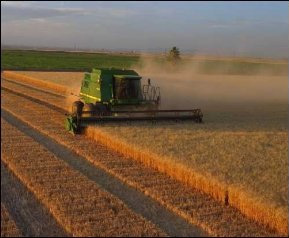 harvesting
modern wheat in Kansas harvesting
modern wheat in Kansas |
Quality and Recipes
Einkorn Research Cooperation
'Bread from the Earth' workshops offered on the history of wheat, artisan bread-baking with ancient and heritage wheats, with practical suppport to restore ancient grains in nutrient-dense cropping systems. See: growseed.org/education.html
1. Lack
of intestinal mucosal toxicity of Triticum monococcum in celiac
disease patients , Daniela Pizzuti, Department of Surgical and
Gastroenterological Sciences, Via Giustiniani 2, IT-35128, Padua,
Italy,
Objective. The treatment of celiac disease is based on lifelong
withdrawal of foods containing gluten. Unfortunately, compliance
with a gluten-free diet is difficult mainly
due to its low palatability. In evolutionary
terms, Triticum monococcum is the most primitive cultivated
wheat. Conclusions. Data show a lack of toxicity of T. monococcum
gliadin in an in vitro organ culture system, suggesting new dietary
opportunities for celiac patients to safely eat einkorn.
*All photos and text on this page are copyright by Eli Rogosa (unless otherwise indicated) and may not be used without written permission.